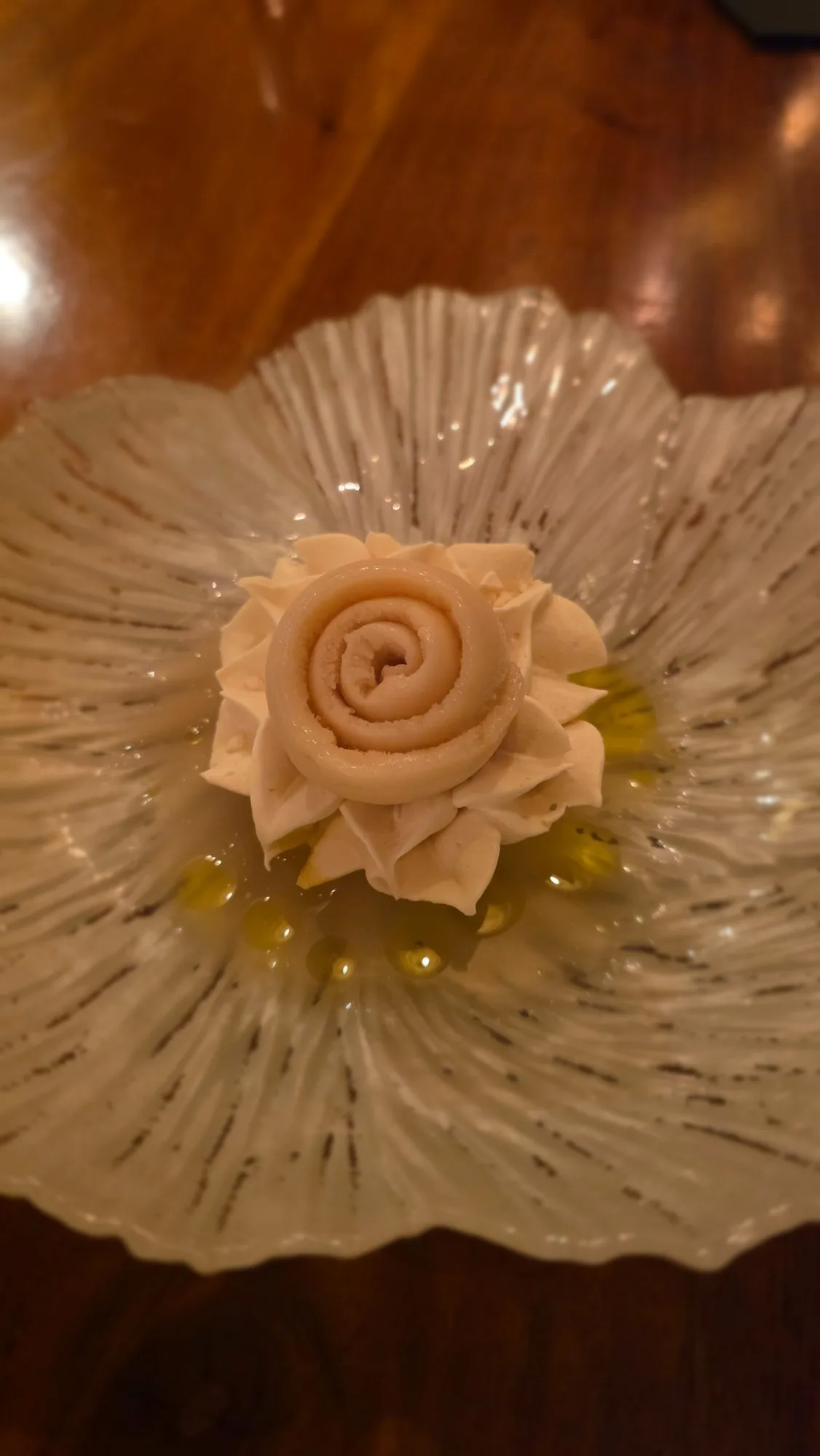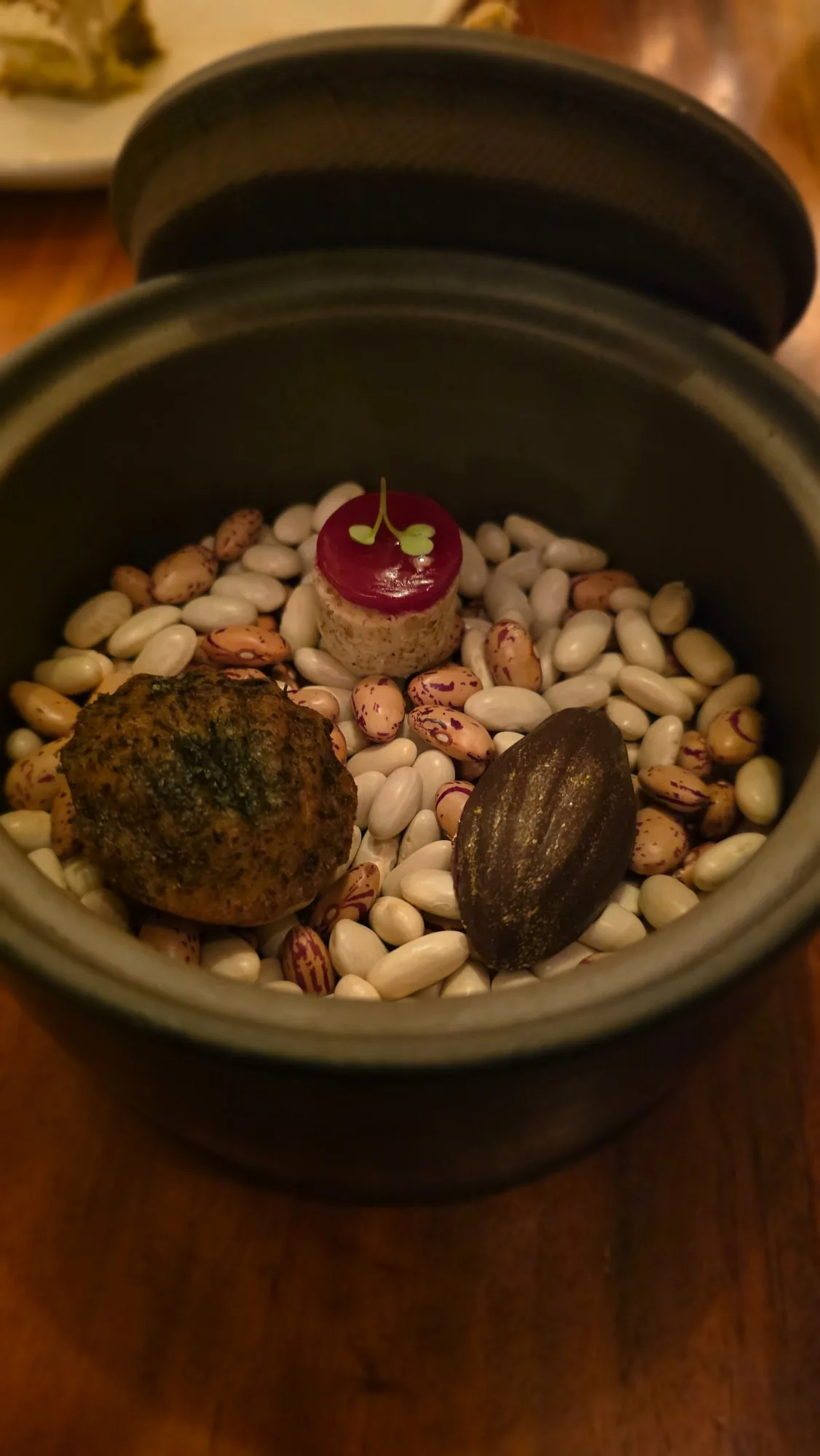
Ten courses in, I worked out what Kása Palma is doing. It takes the food Filipinos eat standing up and rebuilds it with French technique. Street food with a French passport.
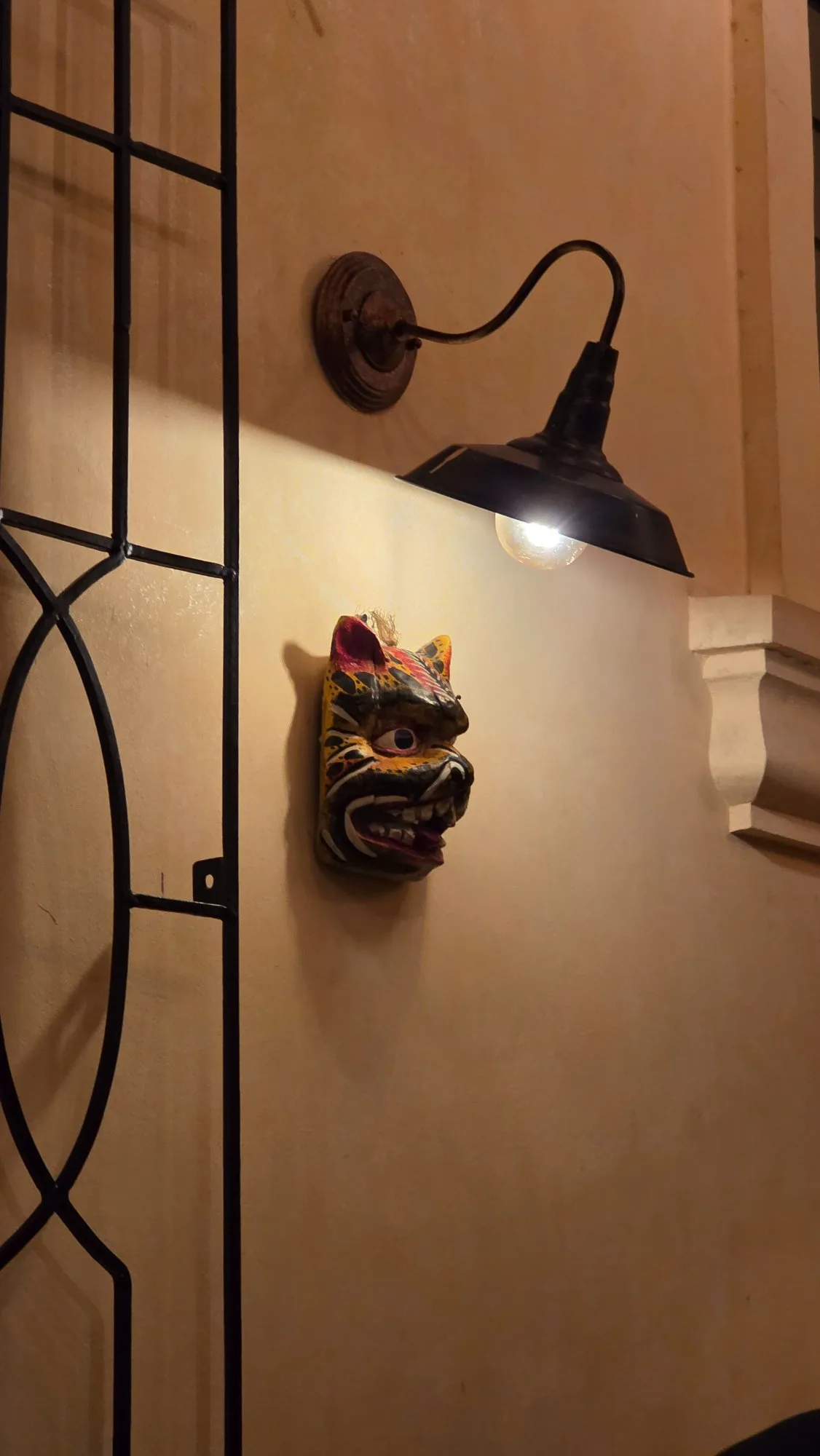
Chef Aaron Isip designed every corner of this Poblacion house himself. No architect. White gravel underfoot and straw cloche lamps, not your usual fine dining setting. It reminded me of my roots in Sri Lanka, and I did not expect to feel that in Makati.
We ate the ten course degustation in the Tasting Kitchen out front. Isip was not in the house that night, but the chef cooking the dishes came out and explained each one himself. A nice touch, and a rare one. You could hear the passion in it.
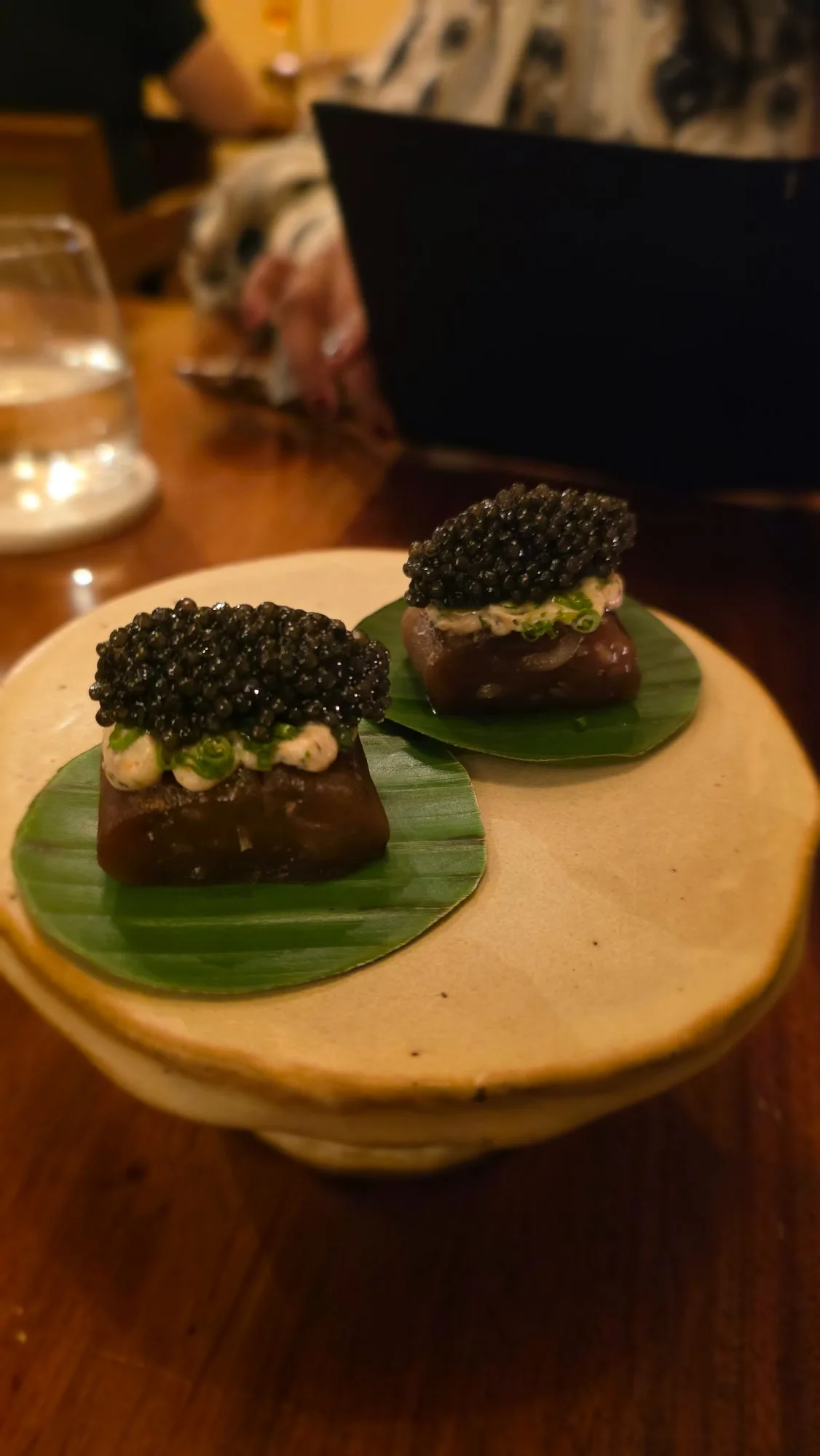
Hors d'oeuvres came in threes. Spider conch with cucumber and a yogurt mint aguachile, chicken neck in a barquillo shell, then tupig with tinapa mascarpone and smoked baerii caviar. That last one is the tell. Tupig is a grilled rice and coconut snack sold on the street in banana leaf. Here it arrives savoury, wearing sturgeon roe. Somebody was having fun.
The young corn kinilaw followed. Dry aged jackfish, corn three ways. Kinilaw with a Peruvian accent.
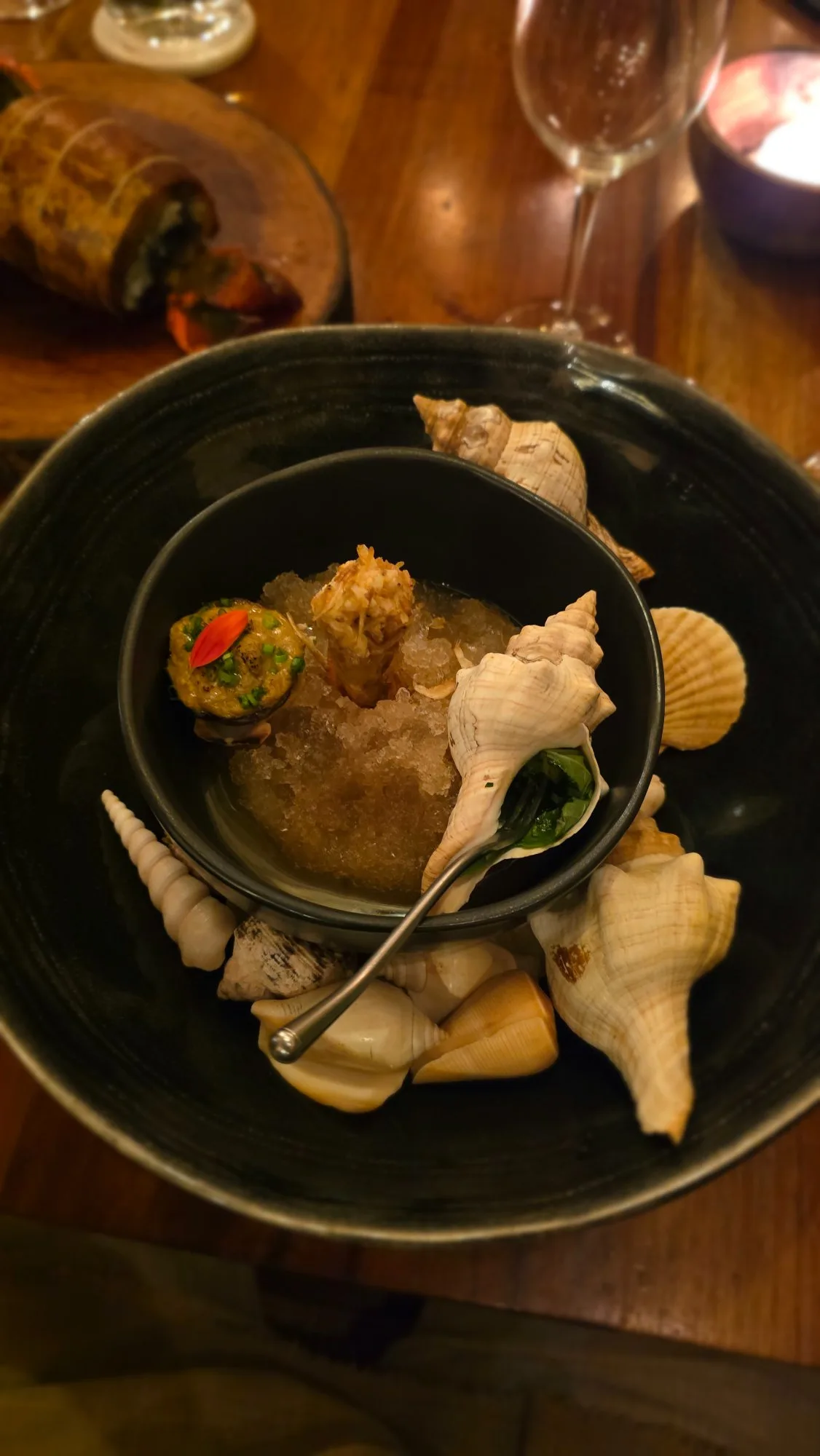
Halo-halo del mar was the boldest idea of the night. Halo-halo is the shaved ice dessert, so turning it into cold seafood takes some nerve. Shrimp tartare, crispy alamang, horse conch, a sea urchin crème brûlée tart. Very cool.
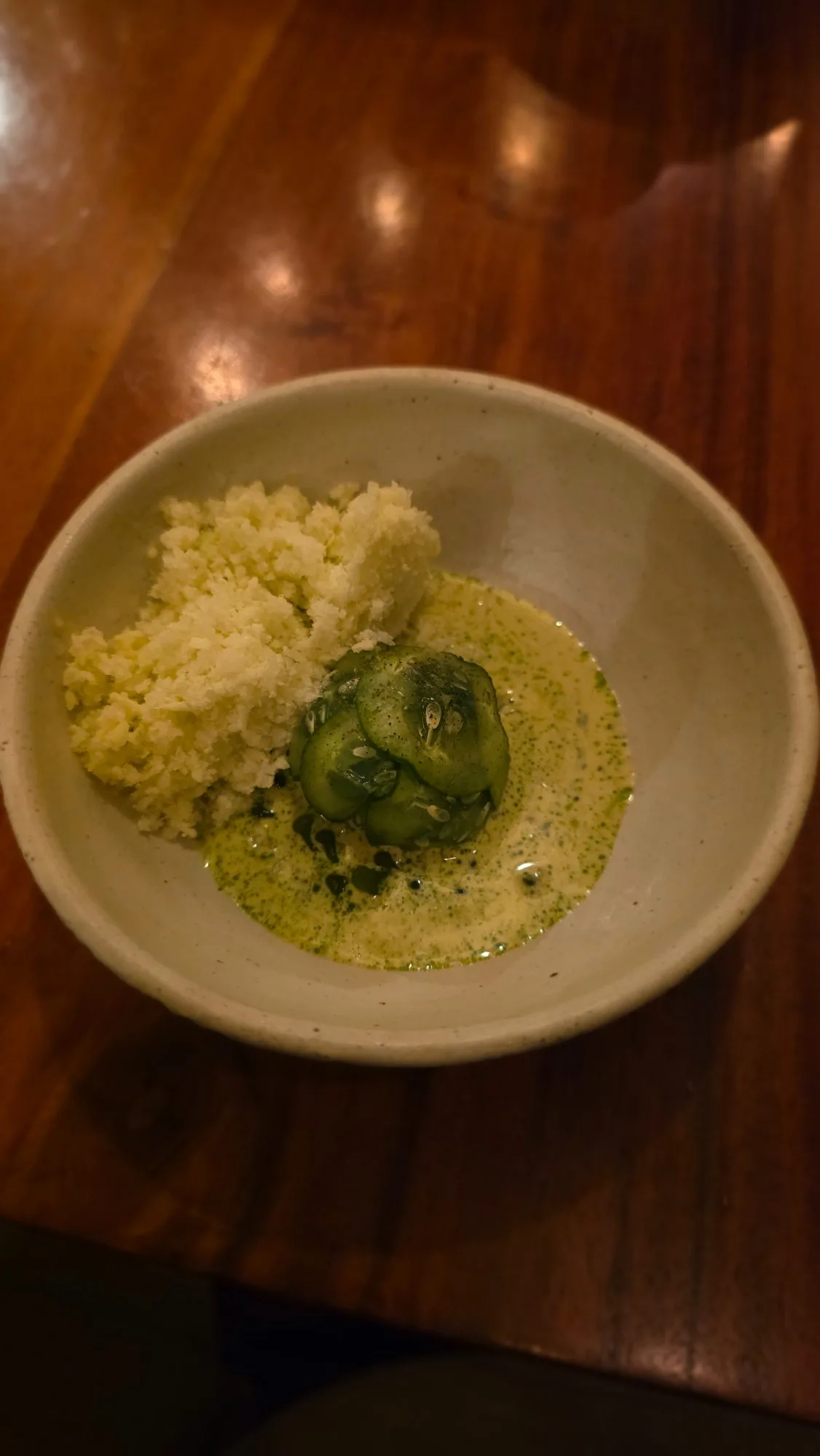
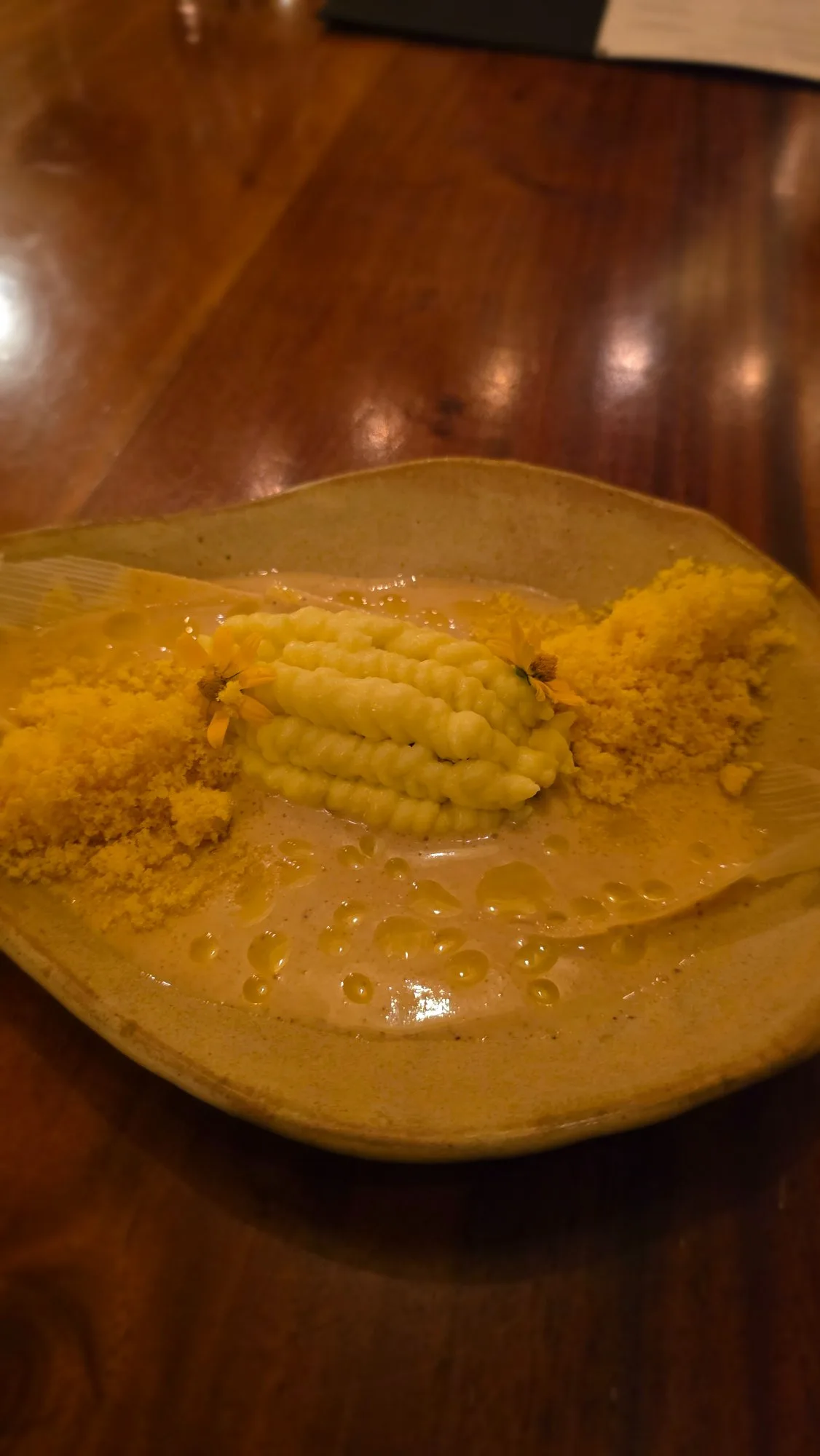
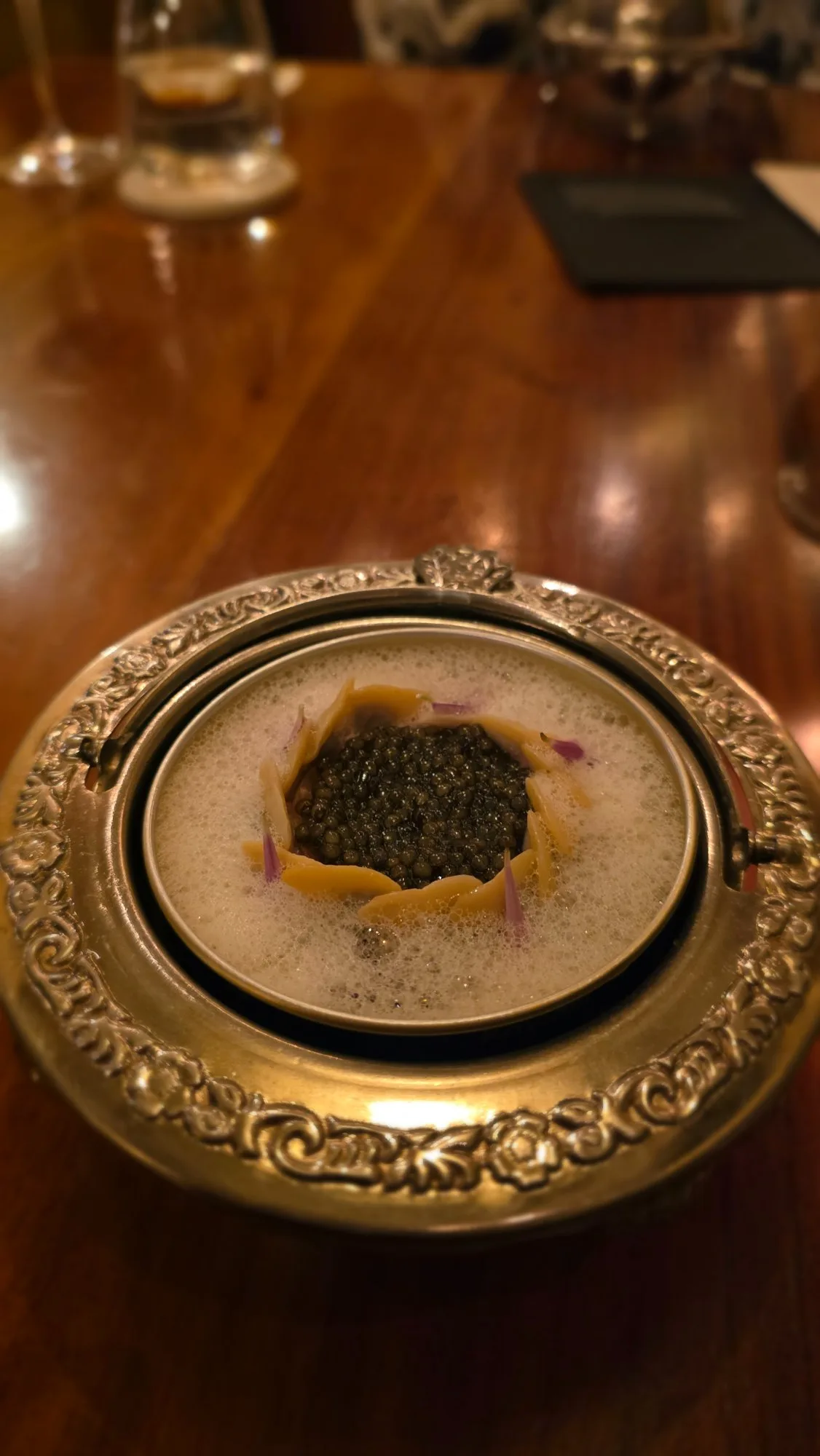
Ube in three textures was my favourite dish of the meal. Manila clams, oscietra caviar, clam emulsion. Not because caviar is fancy. Because three textures of the same ingredient sat in one bowl and every one of them earned its place. Ube is dessert to most people. Here it is savoury, and then it comes back much later as a tuile.
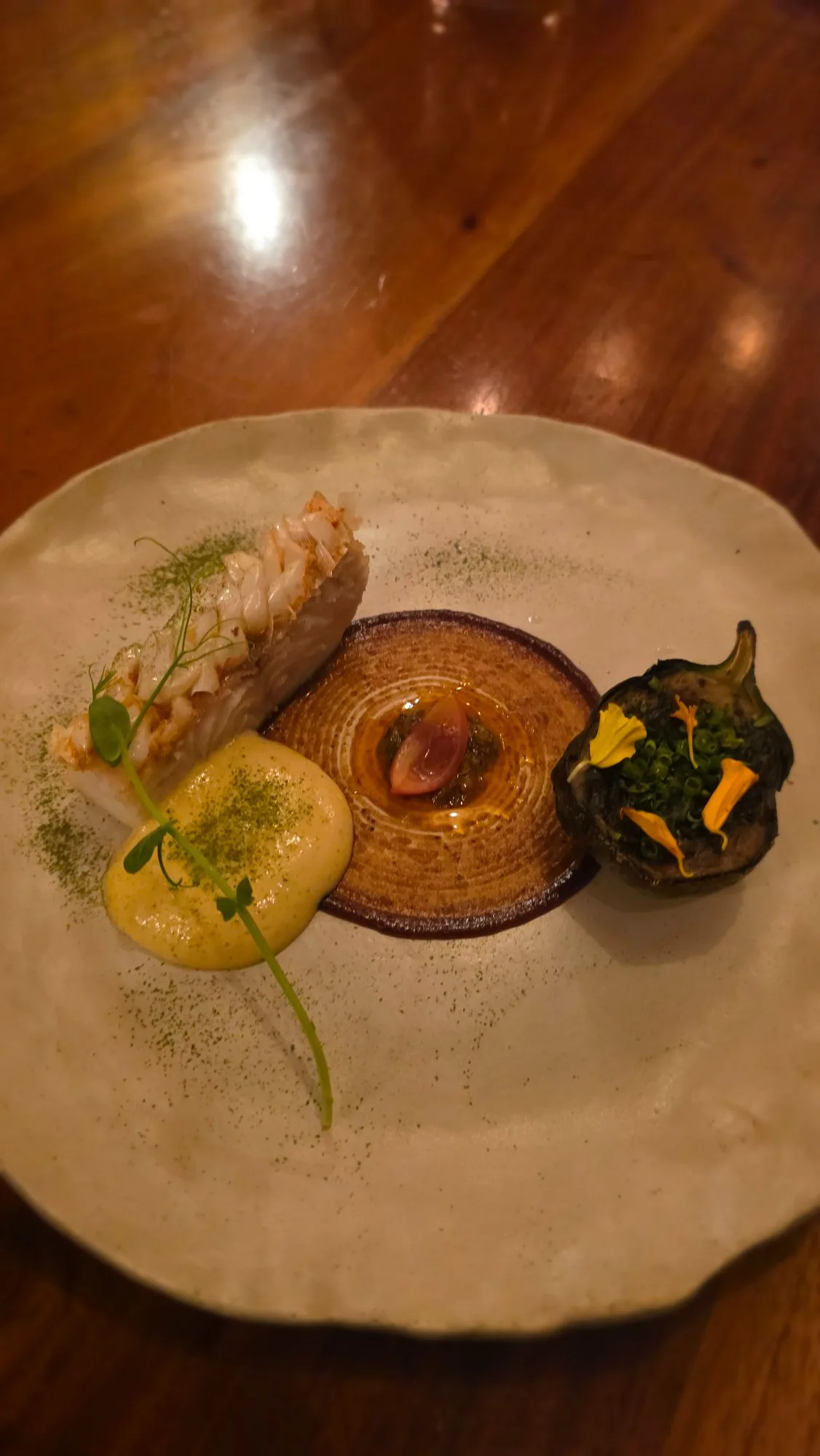
Then the Masbate maya-maya, which was the trippy one. Red snapper plated to look like it still had its fins, except every part of it was edible. Japanese technique, we were told. I stared at it for a while before I ate it.
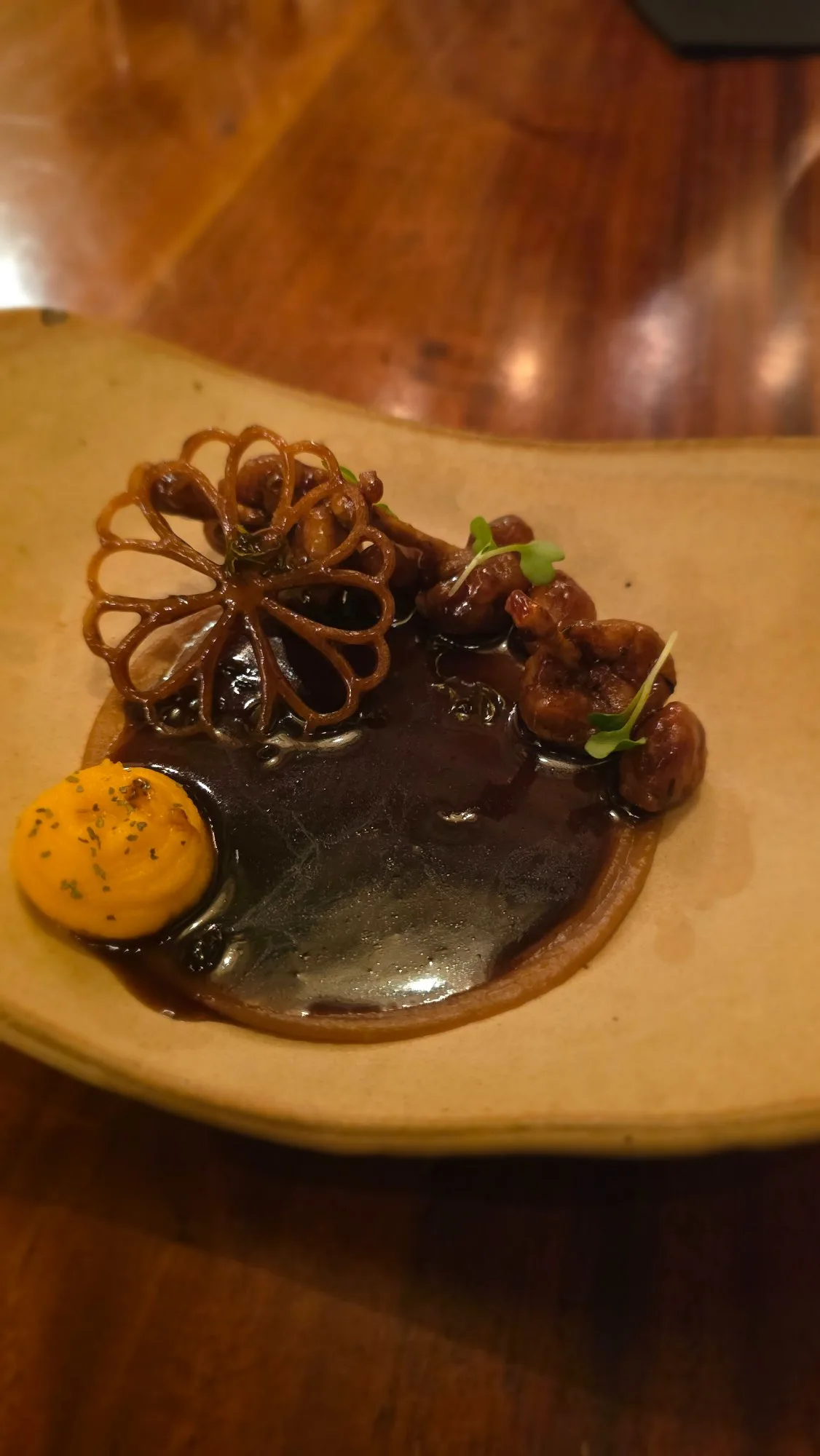
Pampanga frog legs, my first time with frog. Deep fried and smouldered in adobo. It could have been chicken and I would not have known. I enjoyed it anyway, and I suspect that is the point of putting it on the menu.
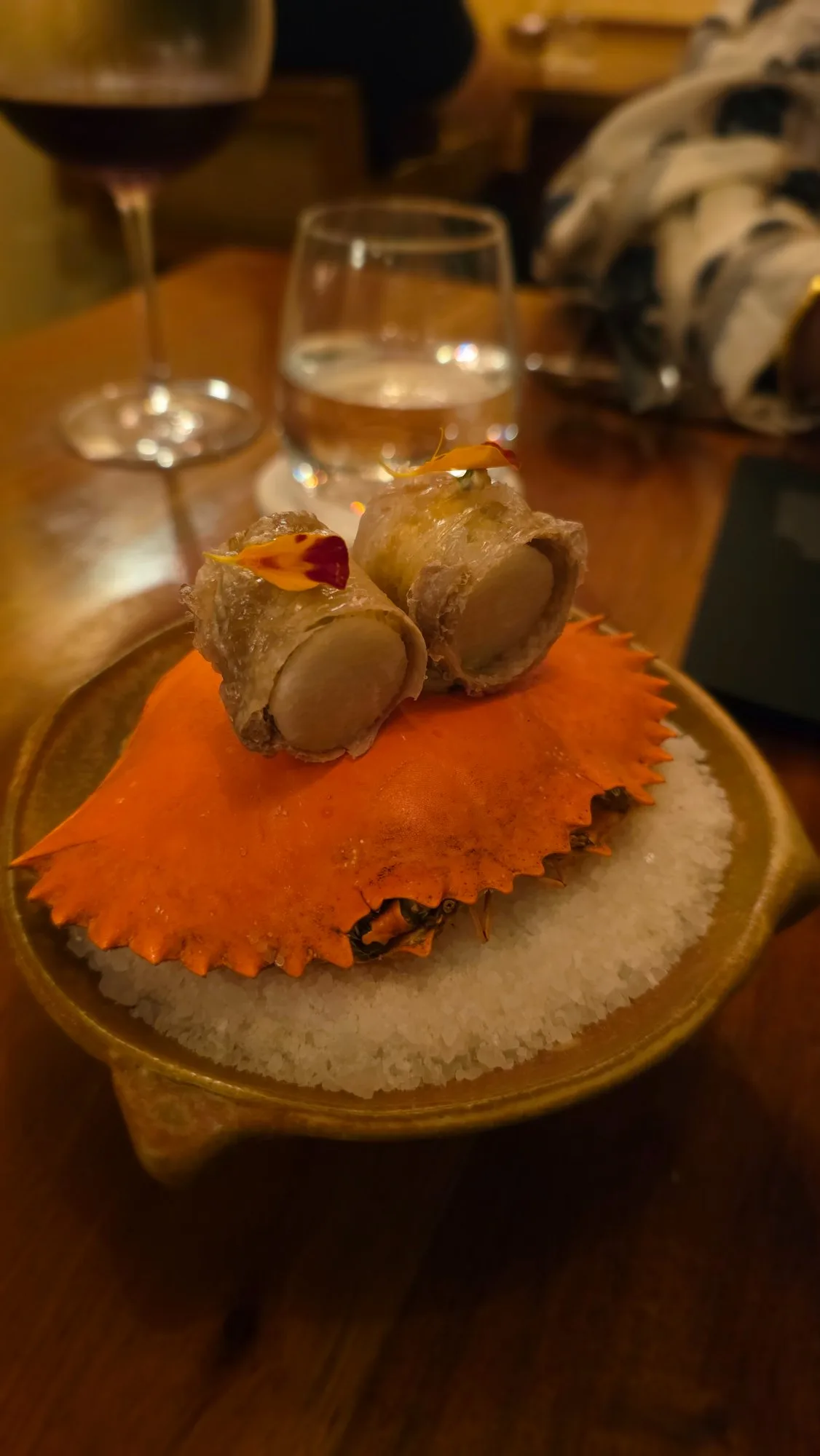
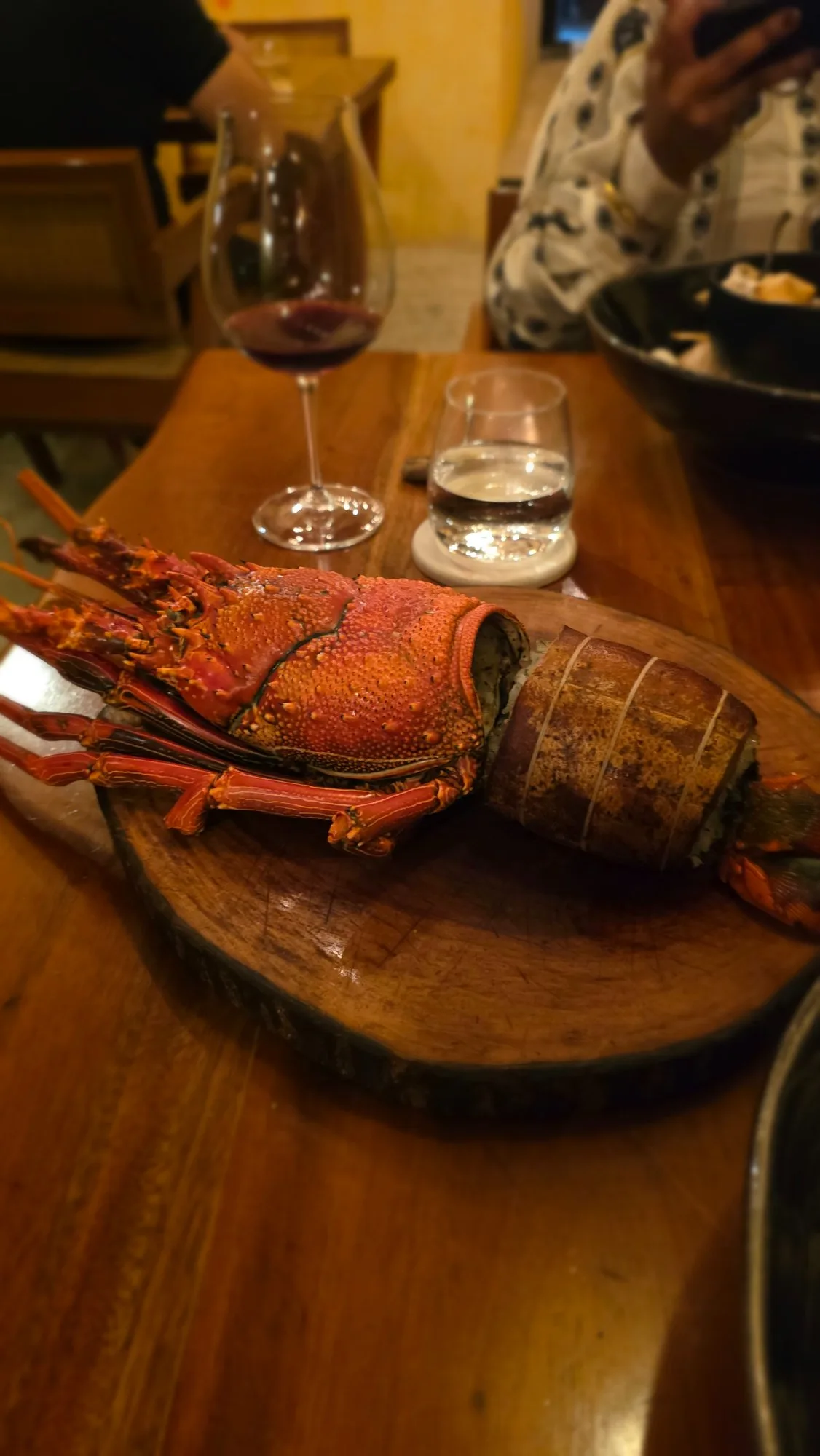
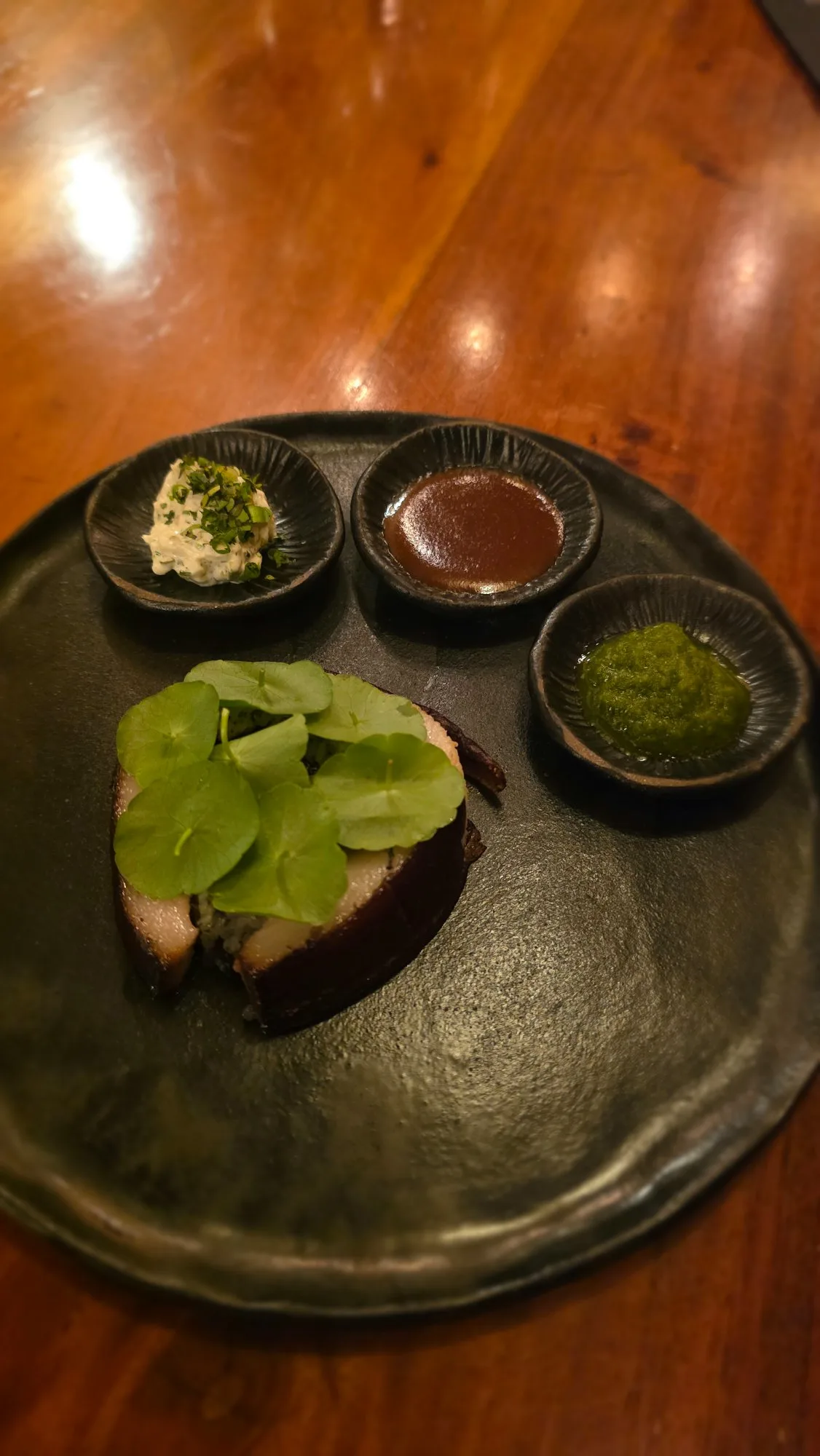
Lechon de lobster is the technical flex. Palawan spiny lobster wrapped in suckling pork belly confit with glutinous rice. Excellent. The cilantro dip on the side was the best thing on the plate.
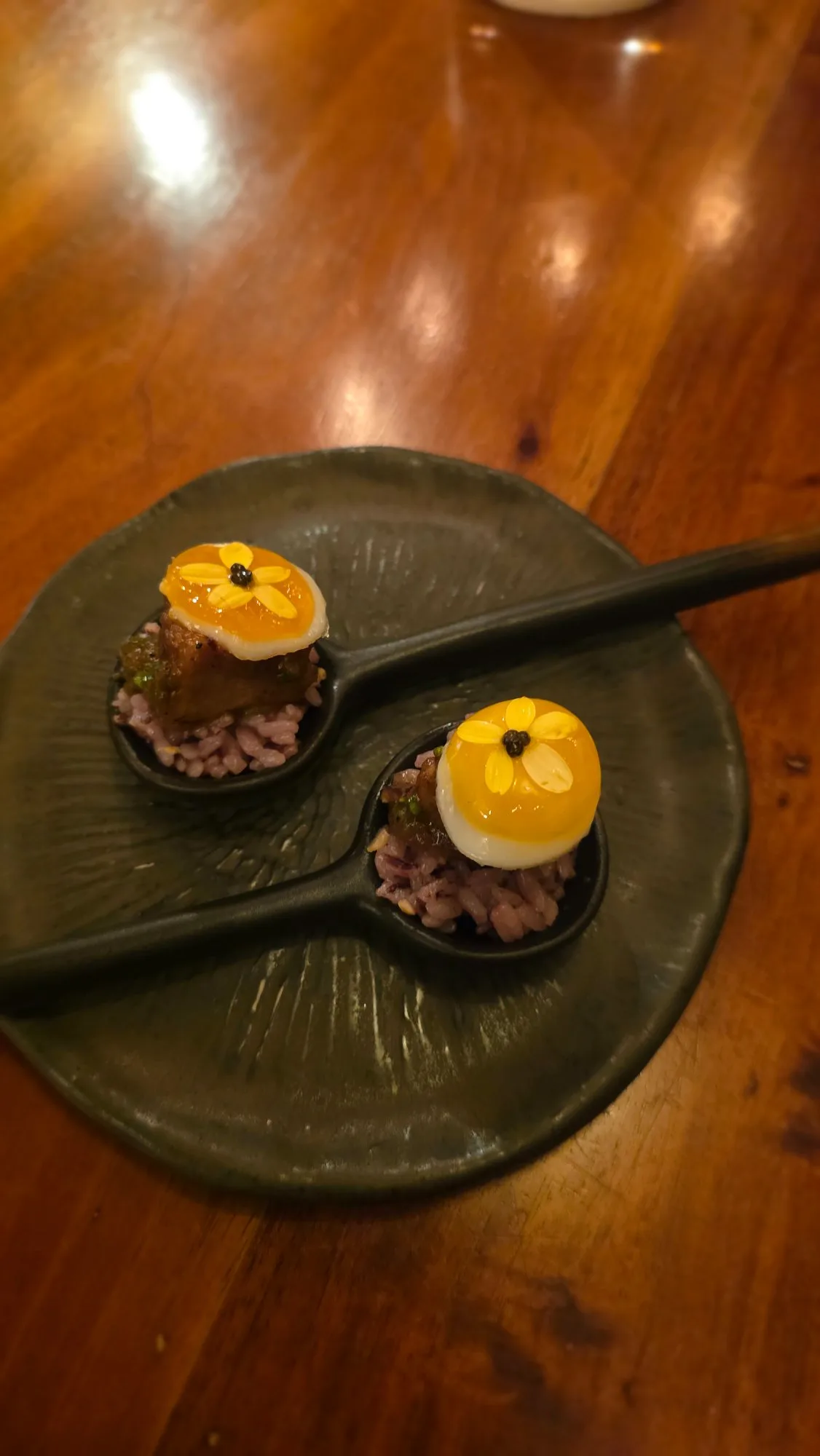
Then foiesilog, a pun on silog. Garlic rice and egg, the breakfast every Filipino grew up on, or so I was told. Swap the cheap cured meat for seared foie gras, put it on Cordillera heirloom rice with a quail egg. It was one bite. It was phenomenal. I wanted six more.
Desserts brought the ube back as a tuile, alongside purple sweet potato ice cream and foie gras salted cream. Mignardises to close.
Two of the eight pairings were Australian, a Patrick Sullivan chardonnay and a Two Hands grenache. Not something I expected on a Manila list, and very welcome. It made sense once we got talking. Sebastian, the sommelier, spent a few years in Australia, and we had a good chat about our better exports. He also clocked which wine I was in love with and kept my glass full without me having to say anything. That is attention without surveillance, and very much appreciated. Ten courses is a long night and nobody let it sag.
Kása Palma took one of the country's first Michelin stars last year. Not the thing I kept thinking about though. I went down a rabbit hole on Isip afterwards. His mother was the cook in the family, and he spent fifteen years in French kitchens. Everything I ate suddenly made sense.
I would come back for the ube, and then I would go straight out the back to the Jungle Kitchen, where there is no gas and no electricity, only firewood.